Fiber Optic Cable Selection Guide: How to Choose the Right Cable for Your Project
Fiber Optic Cable Selection Guide: How to Choose the Right Cable for Your Project
Published: 2026-05-20
Why Cable Selection Matters
Selecting the wrong fiber optic cable for your installation environment can lead to premature failure, expensive repairs, and degraded network performance. Whether you’re building a long-haul backbone, a metro access network, or an FTTH last-mile deployment, understanding the key selection criteria is essential.
This guide covers the five critical dimensions of fiber optic cable selection: fiber type, cable construction, installation environment, mechanical requirements, and compliance standards.
1. Fiber Type: Single-Mode vs Multimode
The first decision is which optical fiber to specify.
Single-Mode Fiber (SMF)
Single-mode fibers have a small core (8-10μm) and transmit a single light mode, enabling long-distance transmission with low attenuation. This is the dominant choice for outdoor and long-haul applications.
- G.652.D — Standard single-mode, low water peak. The most widely deployed fiber type worldwide. Suitable for CWDM and DWDM.
- G.655 — Non-zero dispersion-shifted fiber (NZ-DSF). Optimized for long-haul DWDM transmission.
- G.657.A1/A2 — Bending-insensitive fiber. Essential for FTTH indoor routing and dense cabinet installations where tight bends are unavoidable.
Rule of thumb: For distances over 2km, single-mode is almost always the right choice.
Multimode Fiber (MMF)
Multimode fibers have a larger core (50-62.5μm), enabling cheaper transceivers but limiting distance due to modal dispersion. Used primarily in data centers and enterprise buildings.
- OM3/OM4 — Laser-optimized for 10G/40G/100G Ethernet up to 100-150m
- OM5 — Wideband multimode for SWDM (Short Wavelength Division Multiplexing)
2. Cable Construction: Loose Tube vs Tight Buffer
Loose Tube
Fibers float inside gel-filled plastic tubes, isolated from external mechanical forces. This is the industry standard for outdoor cables.
- Best for: outdoor, long-haul, temperature extremes
- Water protection: gel-filled tubes + water-blocking tapes/yarns
- Fiber counts: 2-288+
Tight Buffer
Each fiber is individually coated with a 900μm buffer layer directly on the 250μm coating, providing robustness for indoor handling.
- Best for: indoor, patch panels, data centers
- Easy connector termination
- Lower fiber counts typically
Hybrid designs with both loose tube and tight buffer elements are available for indoor/outdoor transition applications.
3. Installation Environment
This is where most selection mistakes happen. Match the cable design to the environment.
Aerial (Overhead)
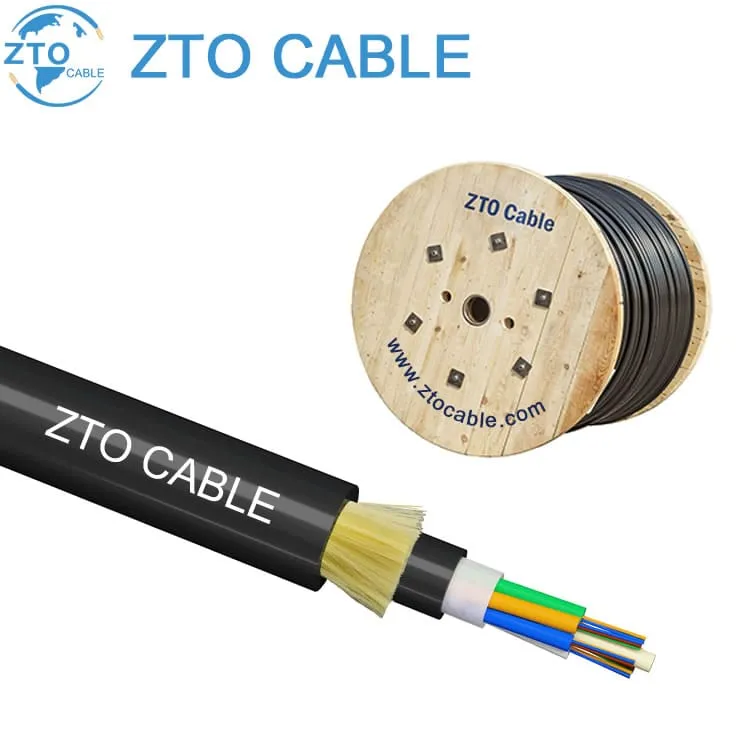
- ADSS (All-Dielectric Self-Supporting) — Installed on power line towers. No metallic elements, immune to electromagnetic interference. Spans 50m-1500m. AT sheath option for lines ≥110kV.
- OPGW (Optical Ground Wire) — Replaces the ground wire atop transmission towers. Combines grounding + fiber communication. For new construction or major renovation of lines ≥110kV.
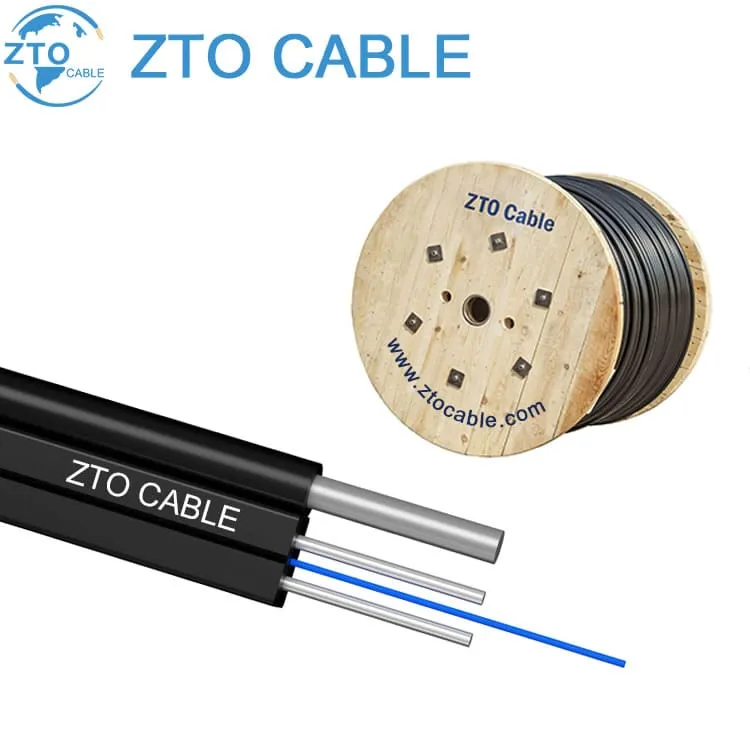
- Figure-8 Cable — Integrated messenger + fiber core. Ideal for telecom poles, 50-300m spans. Faster installation than lashed cable.
Underground (Duct)
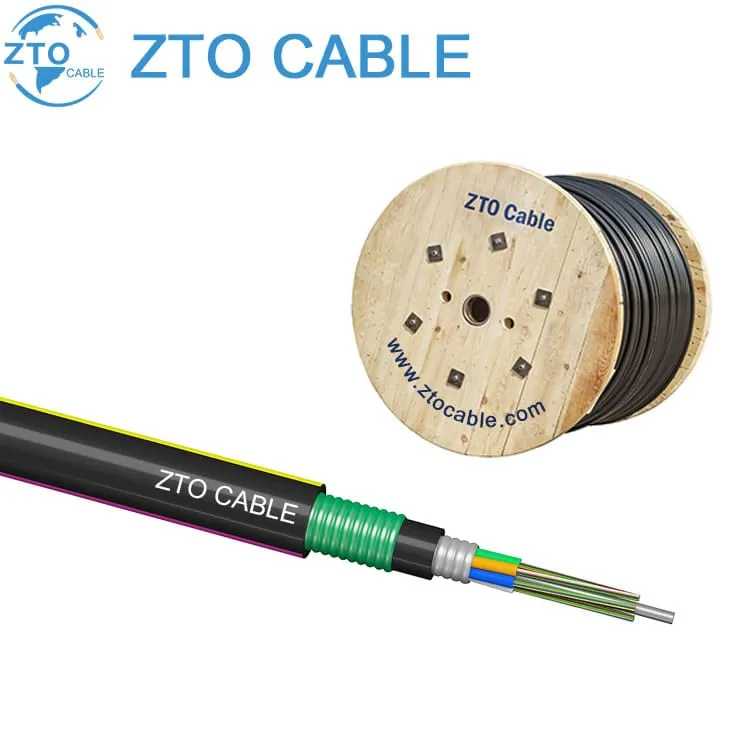
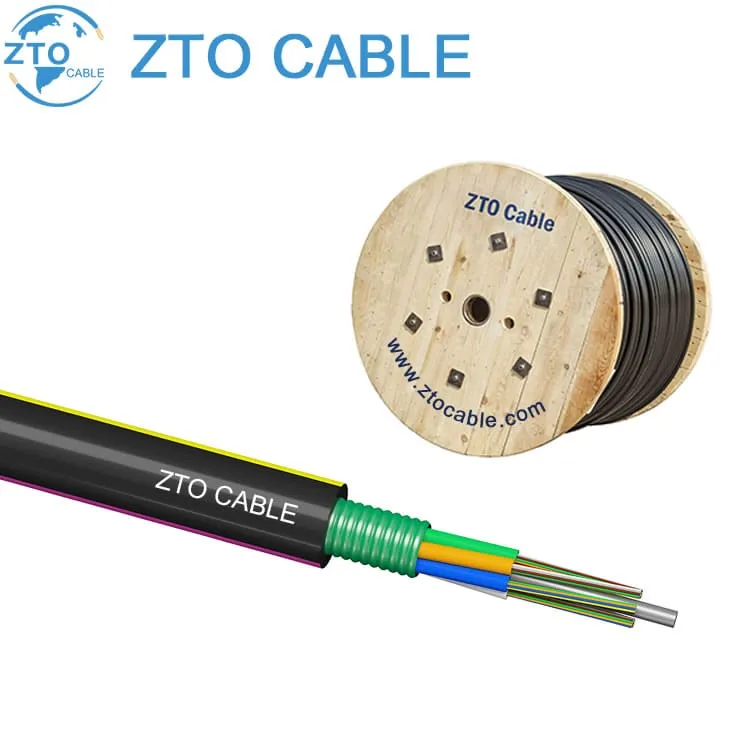
- GYTS — Stranded loose tube with PSP armor. Industry standard for duct installation. Good moisture protection, moderate crush resistance.
- Micro Air-Blown Cable (GCYFXTY / EPFU) — Installed into microducts using compressed air. Minimal civils cost, future-proof for upgrades.
Direct Burial
- GYTA53 — Double armor, double jacket. Designed to be buried directly in soil without ducts. Maximum crush and rodent protection.
Indoor / FTTH Drop
- GJXCH / GJXFH — Butterfly-shaped drop cables. LSZH sheath for fire safety. FRP strength members with optional steel messenger for aerial drops.
4. Mechanical & Environmental Requirements
Key specifications to verify for your project:
| Parameter | What to Check |
|---|---|
| Tensile Strength | Installation vs residual tension ratings |
| Crush Resistance | Short-term (installation) vs long-term (in-service) |
| Bend Radius | Dynamic (during install) vs static (after install) |
| Temperature Range | Operating and storage temperatures |
| Water Protection | For ducts, direct burial, and aerial applications |
| Rodent Protection | Steel tape armor or glass yarn for direct burial |
| UV Resistance | PE sheath with carbon black for outdoor exposure |
5. Standards Compliance
Always verify that cables meet the applicable international standards:
- ITU-T G.652 / G.655 / G.657 — Optical fiber specifications
- IEC 60794 — Optical fiber cable specifications (all parts)
- IEEE P1222 — ADSS cable for overhead power lines
- IEEE 1138 — OPGW cable testing and performance
- Telcordia GR-20 — Generic requirements for optical fiber and cable
- ISO 9001 — Quality management system certification
Summary: Quick Decision Matrix
| If you need… | Choose… |
|---|---|
| Aerial on power lines, long spans | ADSS double jacket |
| Aerial on power lines, short spans | ADSS single jacket |
| Replace ground wire on transmission towers | OPGW |
| Telecom pole aerial | Figure-8 cable |
| Underground duct installation | GYTS |
| Direct burial in soil | GYTA53 |
| Microduct / future-proof network | Air-blown microcable |
| Last-mile FTTH drop | GJXCH / GJXFH |
Frequently Asked Questions
What is the most common type of fiber optic cable?
The GYTS (stranded loose tube, steel tape armored) and GYTA (stranded loose tube, aluminum tape armored) cables are the most widely used outdoor fiber optic cables worldwide. They are deployed in duct, direct burial, and aerial applications for telecom backbone and metro networks, and form the backbone of most national fiber optic infrastructure.
How do I determine the right fiber count?
As a rule of thumb, specify at least 2-3x your immediate fiber requirement. Fiber is inexpensive; the civil works to add more later is not. For a standard metro ring, 48-96 fibers are typical. For long-haul backbone, 144-288 fibers. For FTTH distribution, 12-48 fibers. Many operators now specify a minimum of 144 fibers in any new underground cable to accommodate future growth.
Can I use indoor cable outdoors?
No. Indoor cables use tight-buffered fibers and flame-retardant jackets (LSZH, OFNR, OFNP) that are not designed for moisture exposure or UV resistance. Outdoor cables use loose tube construction with water-blocking gel and UV-stabilized PE jackets. Indoor/outdoor cables (rated for both) are available but cost more and should be specified explicitly if your route transitions between environments.
What is the most important standard to check?
For single-mode fiber, ITU-T G.652.D is the most universal standard — it covers the standard single-mode fiber used in >90% of the world’s fiber deployments. For the cable construction, IEC 60794-1-1 covers generic mechanical, environmental, and optical requirements. Always request test reports showing compliance to both the fiber standard and the cable construction standard separately.
Need Help Selecting?
Every project has unique requirements. Contact our engineering team for a custom cable recommendation based on your specific span distances, environmental conditions, and fiber count requirements.