
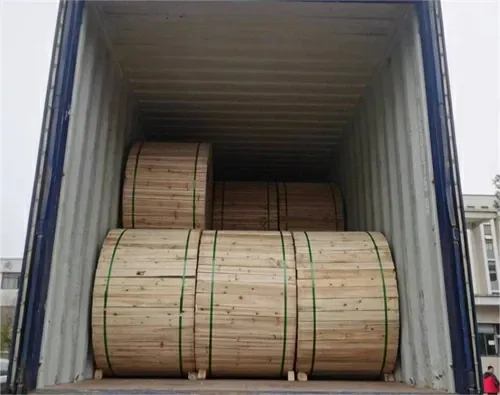
What is fiber optic cable? The lifeblood of speed and the future of communications
What is fiber optic cable? The lifeblood of speed and the future of communications
Published: 2025-06-27
What Is Fiber Optic Cable?
A fiber optic cable is a communications cable containing one or more optical fibers — hair-thin strands of ultra-pure silica glass that transmit data as pulses of light rather than electrical signals. Each fiber consists of a core (where light travels), a cladding (which reflects light back into the core through total internal reflection), and protective coatings. A single fiber strand thinner than a human hair can carry more data than a copper cable the thickness of your arm.
How Fiber Optics Work
Fiber optic communication relies on the principle of total internal reflection. Light from a laser or LED transmitter enters the fiber core at a specific angle and bounces along the core-cladding boundary, traveling kilometers with minimal signal loss. At the receiving end, a photodetector converts the light pulses back into electrical signals.
Key advantage: Because light operates at frequencies of ~193 THz (terahertz) — roughly one million times higher than radio frequencies — a single optical fiber has enormous information-carrying capacity. Modern Dense Wavelength Division Multiplexing (DWDM) systems pack 80-160 separate wavelengths (“colors” of light) onto a single fiber, each carrying 100-400 Gbps.
Fiber Optic Cable Types: A Quick Reference
| Type | Construction | Best For | Max Fiber Count | Standard Reference |
|---|---|---|---|---|
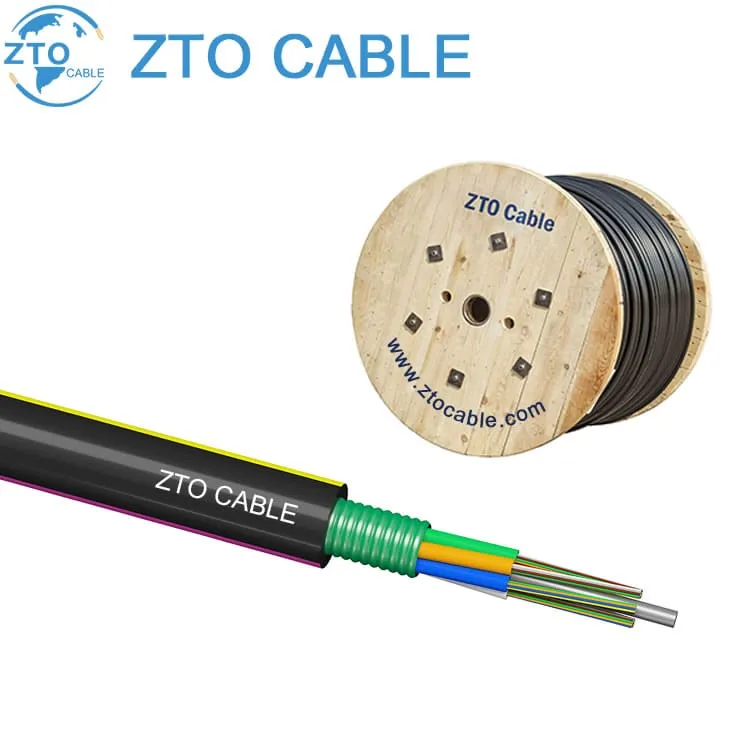
| Loose Tube (GYTS/GYTA) | Fibers in gel-filled tubes around strength member | Duct, direct burial | 288 | IEC 60794-1 |
| ADSS | All-dielectric with aramid yarn strength members | Aerial on power lines | 144 | IEEE P1222 |
| OPGW | Fibers in stainless steel tube within ground wire | Transmission line shield wire | 60 | IEEE 1138 |
| Armored (GYTA53) | Steel tape armor + dual PE sheath | Rodent-prone direct burial | 144 | IEC 60794-1 |
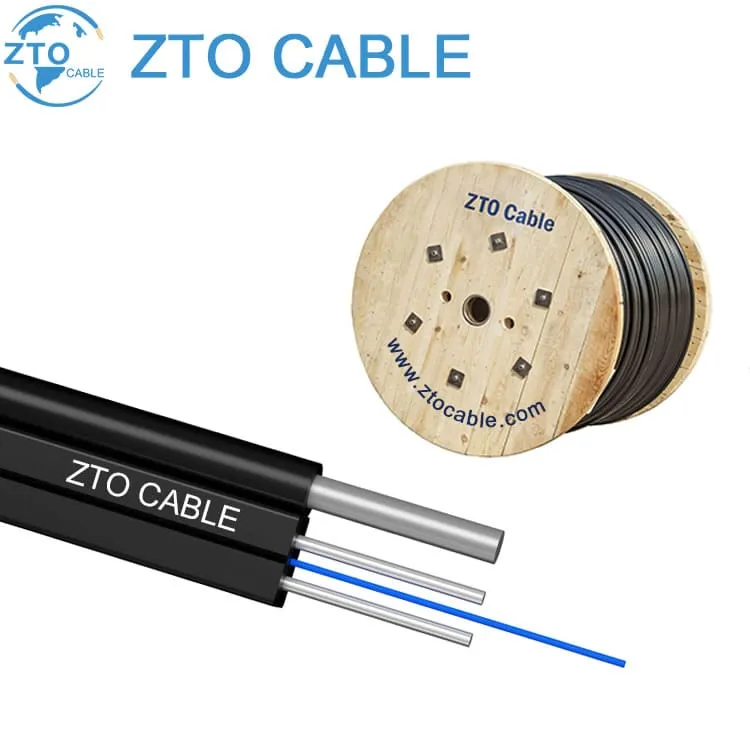
| Drop Cable (GJXCH) | Flat/round with steel messenger | FTTH last mile | 2-12 | ITU-T G.657 |
| Microduct (GCYFXTY) | Miniature loose tube for air-blowing | Urban underground | 288 | IEC 60794-1 |
Fiber Optic Cable vs Copper Cable
| Property | Fiber Optic | Copper (Cat6/Coax) |
|---|---|---|
| Bandwidth | Terabits/s per fiber | Gigabits/s |
| Max distance (no repeater) | 40-120 km | 100 m (Ethernet) |
| EMI immunity | Complete | Requires shielding |
| Weight | ~50 kg/km (ADSS) | ~200 kg/km (equivalent copper) |
| Security | Tap-detectable | Radiates signal |
| Installation cost | Higher initial, lower maintenance | Lower initial |
Understanding Attenuation: The Key Performance Metric
Attenuation measures how much light signal is lost as it travels through the fiber, expressed in dB/km. Modern single-mode fiber achieves:
- 1310 nm: ≤ 0.35 dB/km
- 1550 nm: ≤ 0.22 dB/km (G.652.D)
- G.657 bend-insensitive: ≤ 0.40 dB/km at 1550 nm
At 0.22 dB/km, a signal can travel 40 km before losing 90% of its power — which is why optical amplifiers (EDFAs) are placed every 80-120 km in long-haul networks.
Standards That Define Modern Fiber
All fiber optic products at ZTOFC are manufactured to comply with:
- ITU-T G.652.D — Standard single-mode fiber (the most widely deployed fiber type globally)
- ITU-T G.655 — Non-zero dispersion-shifted fiber for long-haul DWDM
- ITU-T G.657 — Bend-insensitive fiber for FTTH and tight indoor routing
- IEC 60794 series — Optical fiber cable specifications covering mechanical, environmental, and transmission performance
- ISO 9001:2015 — Quality management system certification for manufacturing processes
Related Products
Frequently Asked Questions
1. What is a fiber optic cable?
A fiber optic cable is a cable containing one or more optical fibers — thin strands of glass or plastic that transmit data as pulses of light. Each fiber is about the diameter of a human hair (125µm cladding, 9µm core for single-mode) and can carry terabits of data per second over distances exceeding 100 kilometers without signal regeneration.
2. What is the difference between single-mode and multimode fiber?
Single-mode fiber (ITU-T G.652.D, G.655, G.657) has a narrow 8-10µm core that allows only one light path, enabling long-distance transmission (10-120km+) with low attenuation. Multimode fiber (OM1-OM5) has a wider 50-62.5µm core supporting multiple light paths, used primarily for short-reach data center and LAN applications (up to 550m at 10Gbps). For telecom and long-haul networks, single-mode is the universal standard.
3. How is fiber optic cable better than copper cable?
Fiber optic cable offers several fundamental advantages over copper: (1) Bandwidth — single fiber can carry terabits/second vs copper's gigabit limits; (2) Distance — optical signals travel 40-120km without amplification vs copper's 100m limit; (3) EMI immunity — glass fibers are completely immune to electromagnetic interference from power lines, motors, and lightning; (4) Security — fiber does not radiate signals, making taps detectable; (5) Weight — fiber cables are 60-80% lighter than equivalent copper bundles.
4. What are the main types of outdoor fiber optic cable?
The major outdoor cable constructions are: Loose tube (GYTS/GYTA/GYFTY) for duct and direct burial applications; ADSS (All-Dielectric Self-Supporting) for aerial installation on power lines without a messenger wire; OPGW (Optical Ground Wire) replacing the shield wire on transmission towers; Armored cable (GYTA53/GYXTW) for rodent-protected direct burial; Drop cable (GJXCH/GJXFH) for FTTH last-mile connections; and Microduct cable (GCYFXTY) for air-blown installation in urban environments.